
BOOK REVIEWS, NOTES AND COMMENTS
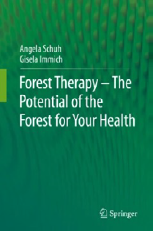
FOREST THERAPY
The potential of the forest for your health
Angela Schuh, Gisela Immich Springer Berlin, Heidelberg; 2022
130 p.
ISBN 978-3-662-64279-5
32,65 €
Who would have thought that forests, or rather outdoor life, preferably in unspoiled ecosystems, could have demonstrable and “scientifically” proven effects on our health conditions? For some time now, green, especially urban green, has become an important, almost priority-level, issue for public health in metropolitan areas in various parts of the world [1].
It is well known that when hospitalized patients are exposed to the green color, but also to blue, (with windows overlooking green areas), such a visual immersion exerts an accelerating effect on recovery performances and times [2, 3]. With regard to pediatric emergency facilities it has been reported that, irrespective of country, community or genetic background, striking similarities in children’s spontaneous preferences regarding hospital care seem to consistently emerge [4].
This book is written by two basic-research authors who have been carrying out for some time intensive research into the therapeutic effects of forest exposure and climate conditions at Ludwig Maximilian University in Munich, promoting concepts related to the preventive use of forest exposure and forest therapy itself.
Obviously, air temperature, humidity, rainfall, wind, oxygenation, and air “cleanliness” in general are reviewed in the text. Gas exchange with the atmosphere is also originally reviewed as a critical parameter. It is an actual novelty that “quietness” is also discussed, touching on the delicate and increasingly topical subject of the so-called “soundscape”, to which the human senses are evolutionarily attuned, in addition to sight and the analogous “odourscape” (here we refer to VOCs, Volatile Organic Compounds, which have been extensively studied) [5].
The effects of relief from thermal stress, understood as protection of the particularly looming thermoregulatory and cardiovascular systems, are one of the most original phenomena taken into consideration.
Similarly, the potential health effects of phytoncides, thanks also to studies by Russian authors published in the second half of the 1950s, represent only an apparent return to the role, now once again considered pivotal, of terpenes emitted, for example, by common trees of the Pinaceae family, which are almost inevitable elements in a variety of ecosystems even in urban areas of our Mediterranean country. In particular, in a “One Health” Third Millennium perspective, an agent such as alpha-pinene has long been the subject of characterization and depicted functional role.
In addition to cognitive effects, memory and attention performance, or psychiatric and/or cardiovascular syndromes, other pathologies (from autism to ADHD to individual pain thresholds) are all parameters influenced by such a type of immersive practice. The entire Chapter 5, a major “bone” of this small volume, focuses on operational activities, providing a sort of guideline on “Which forest is suitable for forest therapy” (title of a successful paragraph).
The text highlights the technical and training requirements for “forest health trainers” and “forest therapists,” emerging professionals who are clearly considered essential in the authors’ scientific and clinical ecosystem. They also usefully focus on the role of mindfulness as an integrative therapeutic approach to forest immersion practices. While the literature on forest therapy is growing rather rapidly, few volumes dwell on these aspects of novel job offers.
In sum, the present one is a rather original, at times provocative, text, which may arouse surprise, if not a certain degree of aversion, in some sectors of contemporary clinical practice. The volume is particularly recommended for young people starting a career in the biomedical world who may be interested in approaches that are unusual within the current educational curriculum but promising given the accumulating evidence of their beneficial effects on psychological well-being.
Gemma Calamandrei, Stella Falsini
and Enrico Alleva
Istituto Superiore di Sanità, Rome, Italy
REFERENCES
- 1. Calamandrei G, Alleva E. Book review of “Come pensano le foreste”, Nottetempo (2021) and of “A piedi nudi nel verde. Giocare per imparare a vivere”, Giunti (2011). Ann Ist Super Sanità. 2021;57:358-60. doi: 10.4415/ANN_21_04_10
- 2. Guidolin K, Jung F, Hunter S, Yan H, Englesakis M, Verderber S, Chadi S, Quereshy F. The influence of exposure to nature on inpatient hospital stays: A scoping review. HERD. 2024;17:360-75. doi: 10.1177/19375867231221559
- 3. Sachs NA, Jiang S. A dialog between two co-editors: evidence-based design and therapeutic landscapes. HERD. 2025;19:5-9. doi: 10.1177/19375867251394609
- 4. Park JG. Color perception in pediatric patient room design: Healthy children vs pediatric patients. HERD. 2009;2(3):6-28. doi: 10.1177/193758670900200302
- 5. Liu N, Bu Z, Liu W, Kan H, Zhao Z, Deng F et al. Health effects of exposure to indoor volatile organic compounds from 1980 to 2017: A systematic review and meta-analysis. Indoor Air. 2022;32(5):e13038. doi: 10.1111/ina.13038
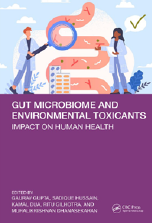
GUT MICROBIOME AND ENVIRONMENTAL TOXICANTS
Impact on Human Health
Gupta G, Hussain S, Dua K, Gilhotra R, Dhanasekaran M (Eds).
Boca Raton: CRC Press; 2025.
294 p.
ISBN 9781032787343
Gut Microbiome and Environmental Toxicants: Impact on Human Health is a timely and comprehensive volume that addresses one of the most rapidly evolving areas in biomedical and environmental health research: the role of the gut microbiome as a key mediator of human responses to environmental toxicants. By integrating perspectives from toxicology, microbiology, immunology, and clinical sciences, the editors provide a multidimensional framework for understanding how environmental exposures translate into health outcomes through microbiome-dependent mechanisms.
The book is organized into thematic chapters that examine a wide spectrum of environmental toxicants and endocrine-disrupting compounds, including heavy metals, pesticides, bisphenol A, phthalates, organic pollutants, and emerging contaminants such as microplastics. Across these chapters, a central concept consistently emerges: the gut microbiome functions as a dynamic and metabolically active interface between environmental exposures and host physiology, significantly influencing susceptibility, toxicity, and disease progression.
A major strength of the volume lies in its detailed exploration of mechanistic pathways. Several chapters focus on the microbiome’s ability to metabolize xenobiotics through enzymatic processes such as reduction, hydrolysis, and deconjugation. These microbial transformations can result in either detoxification or bioactivation of environmental chemicals, thereby altering their toxicity, bioavailability, and systemic distribution. This perspective challenges traditional toxicological models by positioning the microbiome as an additional metabolic “organ” that must be considered in risk assessment.
The book provides an in-depth discussion of key molecular signaling pathways involved in microbiome-toxicant interactions. Notably, the aryl hydrocarbon receptor (AhR) is highlighted as a critical signaling node through which microbial metabolites and environmental pollutants converge to regulate immune homeostasis, epithelial barrier integrity, and inflammatory responses. Dysregulated AhR signaling, driven by toxicant-induced alterations in microbial metabolism of tryptophan, is linked to chronic intestinal inflammation and systemic immune dysfunction.
Equally important is the examination of Toll-like receptor (TLR) signaling, particularly TLR4, in mediating inflammation associated with toxicant-induced dysbiosis. Increased intestinal permeability resulting from microbiome disruption facilitates the translocation of lipopolysaccharides (LPS), activating TLR-dependent pathways and triggering downstream signaling through NF-κB. The sustained activation of NF-κB is shown to promote chronic low-grade inflammation, a hallmark of metabolic disorders, cardiovascular disease, and immune-mediated conditions.
The volume also gives considerable attention to the role of the gut microbiome in maintaining intestinal barrier integrity. Several chapters describe how environmental toxicants reduce the production of short-chain fatty acids (SCFAs), particularly butyrate, leading to impaired tight junction protein expression and increased gut permeability. This “leaky gut” phenomenon amplifies systemic exposure to toxicants and microbial products, further exacerbating inflammation and oxidative stress.
Of particular interest are chapters addressing neurotoxicity and the gut-brain axis. The editors effectively synthesize evidence linking microbiome alterations caused by heavy metals and persistent organic pollutants to changes in neurotransmitter synthesis, neuroinflammation, and hypothalamic-pituitary-adrenal (HPA) axis dysregulation. These mechanisms provide a compelling biological basis for associations between environmental exposure and neurodevelopmental, cognitive, and neurodegenerative disorders.
Beyond mechanistic insights, the book explores clinical and translational implications, emphasizing the gut microbiome as a promising therapeutic target. Strategies such as dietary modulation, prebiotics probiotics and personalized microbiome-based interventions are discussed as potential tools to mitigate toxicant-induced health effects. This translational focus enhances the practical relevance of the volume for clinicians and public health researchers.
Overall, Gut Microbiome and Environmental Toxicants: Impact on Human Health stands out for its scientific depth, interdisciplinary scope, and forward-looking perspective. It successfully bridges experimental research and clinical relevance, making it a valuable reference for researchers, clinicians, toxicologists, and graduate students. The book underscores the necessity of incorporating microbiome science into environmental health risk assessment and opens new avenues for preventive and therapeutic strategies aimed at reducing the burden of environmentally driven diseases.
From a toxicological perspective, the volume highlights individual contaminants in depth, yet real-world exposures are typically chronic and involve complex mixtures of chemicals. The combined and potentially synergistic effects of multiple toxicants on the gut microbiome remain insufficiently characterized. This represents a critical gap, particularly for environmental health risk assessment, where mixture toxicity is the norm rather than the exception.
Looking forward, the book implicitly points toward several promising future research directions. Longitudinal human cohort studies integrating microbiome profiling with exposomics, metabolomics, and clinical phenotyping will be essential to establish causal relationships between environmental toxicants, microbiome alterations, and disease outcomes. Advances in systems biology, including multi-omics integration and machine learning approaches, may help disentangle the complex networks linking microbial metabolism, host signaling pathways (such as AhR, TLR, and NF-κB), and health effects.
Furthermore, future work should prioritize the development of standardized methodologies for microbiome analysis and toxicant exposure assessment, enabling more robust comparisons across studies. From a translational standpoint, controlled clinical trials are needed to validate microbiome-targeted interventions – such as probiotics, prebiotics, and dietary strategies – as viable tools to mitigate toxicant-induced health effects.
In conclusion, while the volume effectively consolidates current knowledge and highlights key mechanistic pathways, it also underscores the need for integrative, human-centered research approaches. Addressing these limitations will be crucial for translating microbiome science into actionable strategies for environmental health protection and personalized medicine.
Renata Alleva
Università di Bologna, Bologna, Italy