
BOOK REVIEWS, NOTES AND COMMENTS
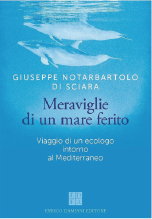
MERAVIGLIE DI UN MARE FERITO
Viaggio di un ecologo intorno al Mediterraneo
Giuseppe Notarbartolo di Sciara
Milano: Enrico Damiani
Editore; 2025
416 p.
ISBN 9791254560716
29,90 €
[Wonders of a wounded sea: An ecologist’s journey around the Mediterranean]
Giuseppe Notarbartolo di Sciara is a marine ecologist, biologist, and conservationist who has long been able to skillfully convey through these pages – starting from his childhood memories – all his love and, above all, his insatiable curiosity for the sea. In a “One Health” vision, his passionate writing may serve as a punctual avenue of convergence between classical biomedicine and biological oceanography
Born in Venice, a splendid city surrounded and permeated by water (but also, as the writer points out, already at that time poor in marine animal biodiversity compared to today), the author, still a child, begins discovering a magical world during a tedious Sunday. Lying on his stomach, idly resting on a mascareta (a typical Venetian boat), he observes the life unfolding in the crystal-clear water.
The “micro-theater” that appears before his eyes – animated by slow hermit crabs, colorful sea anemones, graceful brittle stars (ophiuroids), and small shore crabs – fascinates him so deeply that this universe becomes the solid and lifelong passion of his existence. It is a striking example of how an engaging childhood passion can transform into the enduring and mature professionalism of a marine biologist.
This volume is therefore capable of powerfully igniting the reader’s curiosity toward the blue labyrinths of an incredibly fascinating planet – one that has always inspired poets and philosophers – rich in creatures with bizarre shapes, microscopic organisms or gigantic beings, algae and plants that are colorful and multifaceted. At the same time, it provides greater awareness of the serious risks shared by these forms of life, many of which are in grave danger of extinction or severe decline. An ecological disruption that may involve the health not only of our aquatic ecosystems, but impact the one of human population.
In the mid-1980s, after nearly a decade spent in the United States working closely with the oceanographer Walter Munk, his mentor, and after earning a PhD in Marine Biology from the University of California, Notarbartolo returned to Italy determined to raise awareness among a population still largely inattentive to the conservation of ecosystems. From this desire emerged, in the early years of the new millennium, the idea of undertaking a (imaginary) journey – actually the sum of many journeys he had chosen – of 4,600 miles to recount the wonders of the Mediterranean and to instill a greater ecological awareness in human beings and of their fundamental role in protecting the environment. The “fantastical” voyage aboard the boat Pantoporia is also an inner journey in which the author experiences a deep fusion with the aquatic environment. It represents an inner growth and a strengthening of his determination to fight for the good of a nature that is perceived as external but is in reality part of ourselves.
Reading the book allows us to discover the strengths and vulnerabilities of the Mediterranean, the importance of winds and ocean currents, and their current fragile balance due to global warming and the looming danger caused by the socio-economic interests of the human species.
A first step could be for each of us to understand the damage humanity has caused to the aquatic environment and the creatures inhabiting it. For this reason, the book is recommended both to the vast audience of nature lovers and environmentalists and, above all, to the many professionals in the biomedical field who are sensitive to the rapidly emerging “One Health” issues among the potential readers.
The main message coming from the text is in fact a warning about the reckless and catastrophic actions of human activities which, over the centuries, have caused the impoverishment and destruction of many areas of our beloved sea. Homo sapiens is compared to “a nine-headed Hydra unable to avoid polluting the very cradle of the civilization it has created, and which in its destructive impulse will end up wiping itself out along with everything else”.
Within the pages of this volume – sometimes playful but deeply scientific, given the author’s credentials (formerly President of ICRAM, the Central Institute for Applied Scientific and Technological Research on the Sea, later incorporated into ISPRA, the Italian Institute for Environmental Protection and Research) – one can read stories of encounters with a varied fauna. Among them are the swift pods of orcas that amaze with their Machiavellian and highly effective strategy for hunting tuna – the same “mischievous” ones that often amuse themselves by striking the hulls of ships they encounter, sometimes causing significant damage without ever causing sinkings.
There is also the sensational encounter with Risso’s dolphins, large delphinids with round heads that produce vocalizations “which sometimes resemble irreverent raspberries,” while performing fascinating undulating movements of their tails emerging from the water. The author recounts with enthusiasm the captivating choreographic movements of mobula rays (described as “miniature mantas”), the close encounter with a pilot whale that surfaces with its “imposing big head” and, for a suspended instant, meets the gaze of Homo sapiens, filled with wonder before it. His universe is profoundly human in the sense of a scholar immersing himself in an ecosystem and intuits and characterizes its inner functioning.
Above all, the volume allows us to understand the long and often troubled path that led to the creation of the first officially protected marine area on Earth – a celebrated, well-known, and paradigmatic case of Italian scientific excellence that became an operational reality and a reference point for the international community of environmental, evolutionary, and biomedical scholars.
This internationally significant achievement is only the first major step, or rather “the starting point”, toward the creation of a healthier world, a reality full of awareness thanks to the work of women and men of good will. This is precisely one of the goals of the so-called Third Mission that universities and research institutions pursue in order to promote scientific literacy among ordinary citizens.
The successes achieved by scientific groups such as the one described here are encouraging, but we also know that we must never lower our guard against alarming problems such as pollution, overfishing, illegal fishing, and navigation activities that disregard environmental damage. These “Horsemen of a Marine Apocalypse” will always represent risk factors for the Earth’s ecosystem, yet they will increasingly be countered by the determination and perseverance of those who understand that we are all part of the same planet, without separation.
A change of approach is absolutely necessary, even if it will take time to be fully conveyed to the general public. According to the author, a new awareness of respect for living beings may already be seen in the next generations. This will heal the distance between humanity and nature, transforming the dangerous idea of wanting to dominate something that, if destroyed, could cause great catastrophes even for us, sapiens yet “reckless” beings.
“Who, if not us, can defeat the monster, if the monster is ourselves?”.
Stella Falsini and Enrico Alleva
Istituto Superiore di Sanità, Rome, Italy
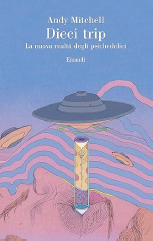
DIECI TRIP
La nuova realtà degli psichedelici
Andy Mitchell
Translation by Chiara Veltri
Torino: Einaudi; 2025
370 p.
26,00 €
ISBN 9788806267360
[Ten trips: a psychedelic adventure]
Ten trips by Andy Mitchell is situated within a unique historical moment for psychedelics, arguably the only one truly comparable to the 1960s: the so-called psychedelic renaissance. Unlike that earlier period, however, this new resurgence does not emerge from countercultural circles, but from universities, hospitals, biotech start-ups, and healthcare institutions. It marks a renewed centrality in public discourse, achieved through scientific legitimation, clinical practice, and the language of evidence; indeed, this transformation constitutes the book’s central focus. Mitchell, a British clinical neuropsychologist, draws on ten experiences with different substances in markedly diverse settings not as a purely narrative device, but as a means of examining the internal tensions of the present historical moment. Ten Trips is neither an uncritical celebration of psychedelics nor a straightforward experiential memoir; rather, it offers a thoughtful and at times uneasy reflection on what may be at risk of being lost as these substances regain social and clinical acceptability.
The book stages a fracture that has become increasingly visible today. On the one hand are the traditionalists, often more idealistic in orientation, for whom the psychedelic experience is inseparable from ritual and symbolic context, including the forest setting, the presence of a shaman, and a dimension that might be described as spiritual or initiatory. On the other hand are the pragmatists, or realists, who regard the “trip” as a side effect, if not an outright obstacle: something to be reduced, controlled, or even eliminated in order to render psychedelics compatible with clinical protocols and with integration into public healthcare systems. Within this framework, therapeutic value would not lie in the subjective experience itself, but rather in the underlying neurobiological mechanisms, which could in principle be isolated without necessarily involving visions, ego dissolution, or intense altered states of consciousness.
One of the principal merits of Ten Trips is that Mitchell refuses to resolve this tension in ideological terms. He offers neither a reconciled synthesis nor a definitive answer; indeed, he insists that, at present, such an answer simply does not exist. His position is deliberately suspended, though not neutral: the book clearly highlights the risk that the psychedelic renaissance, precisely in its attempt to become mainstream, may end up amputating what makes these substances culturally, historically, spiritually, and politically significant. If the trip is entirely removed, attenuated, or treated as a mere inconvenience, psychedelics risk being confined to a purely technical, clinical use, stripped of imaginative and symbolic depth, becoming, in effect, a new SSRI. In such a scenario, the psychedelic renaissance might be remembered not as a genuine paradigm shift, but as a brief historical moment: a period in which psychedelics re-emerged only to be normalized and reframed within Western biomedical paradigms, to the point of losing the “trip” itself.
And yet, from a clinical and institutional perspective, this “loss” may not necessarily be a loss. The possibility of separating antidepressant efficacy from the psychedelic experience is not merely a theoretical or neuroscientific question; it represents a pivotal issue for the organization of healthcare services. Indeed, it may determine whether we are dealing with a treatment destined to remain confined to a small number of highly specialized centres, requiring complex settings, complex staffing requirements and associated costs, or with an intervention that could be integrated into routine clinical practice. If it were possible to demonstrate that the therapeutic effect is at least partly independent of altered states, psychedelics could become more manageable, more readily standardizable, and, above all, more accessible to patients, potentially also within the national healthcare systems (e.g., Italian National Health Service). From this standpoint, a reduction of the trip would not necessarily represent an impoverishment; rather, it could be a precondition for broader equity of access and for systemic sustainability.
It is worth recalling the role that the Istituto Superiore di Sanità (ISS, Italian National Institute of Health) played in the early discussion on the potential psychopharmacological value of psychoactive agents. In 1973, Marcello Baraghini organized a workshop on this topic. In preparation, he initially contacted Nobel Laureate Daniele Bovet, founder and long-time head of the Laboratorio di Chimica Terapeutica at ISS and, at that time, Director of the Laboratorio di Psicobiologia e Psicofarmacologia at Consiglio Nazionale delle Ricerche (CNR) in Rome. Bovet referred him to Giorgio Bignami, who was then leading the Reparto di Psicofarmacologia within the Laboratorio di Farmacologia at ISS, directed by Vincenzo Longo (Giambruno Legnaioli, in verbis). In the years that followed, however, research in this field was largely overshadowed by growing social and political concerns surrounding psychoactive substances, which came to be viewed primarily as drugs of abuse rather than as potential therapeutic agents.
From a stylistic perspective, the book privileges reflection over immersive narrative. Readers expecting vivid and extended descriptions of the experiences may find themselves disoriented: Mitchell frequently interrupts the narrative to broaden the discussion to philosophy, the history of psychiatry and psychedelics, research policy, and the political economy of mental health. This choice is consistent with the book’s broader ambitions, although at times it makes the reading more demanding. Yet it is precisely this density that makes Ten Trips relevant for a readership seeking not entertainment, but critical tools to understand what is currently unfolding in the field of psychedelics. More broadly, it will appeal to readers interested in the current and future role of psychedelics and in the assumptions that shape their contemporary resurgence.
In sum, Ten Trips places the narratives of individual journeys within a broader reflection on the historical moment in which these experiences become possible and legitimate, yet at the same time under threat. Mitchell neither endorses a romantic vision nor a technocratic one; rather, he compels the reader to confront an uncomfortable question: what are we willing to sacrifice – experience, mystery, subjective transformation, even the idea of “multiverses” – so that psychedelics may finally enter the realm of “normality”? It is a question that remains open, rendering the book not a conclusion but a critical exploration of a transition still unfolding.
Francesca Zoratto and Antonio Inserra
Istituto Superiore di Sanità, Rome, Italy

MEDICINE IN RURAL CHINA
A personal account
C.C. Chen
in collaboration with Frederica M. Bunge
Berkeley (CA): University of California Press; 1989
237 p.
ISBN-10: 0520062981
82,00 €
On the right: front cover of the original edition in Chinese
This substantial and dense volume opens with an elegant photographic sequence providing a visual prelude to the narrative. Images of traditional social organization, together with a final photograph depicting a group of physicians in 1981, frame a text that unfolds with remarkable clarity and narrative fluency, at times recalling the most engaging works of contemporary historical writing.
As suggested by its title, the book offers a personal perspective – therefore a “personal account” – by a health professional who combines medical expertise with a strong historical sensibility and an ability to adopt broad, even visionary perspectives. Through this lens, the author reconstructs a crucial historical trajectory in the development of medical sciences and rural sociology, spanning from the early decades of the twentieth century to the threshold of the present day.
As the editor emphasizes in the introduction, the sixty years covered by these memoirs in the field of community medicine have witnessed more progress in human health than the preceding two millennia. Globally, infant mortality rates have been reduced by more than half, while life expectancy has nearly doubled.
The pivotal figure, Dr. Chen, started his medical studies in the 1920s. Only decades later – by the mid-1980s – did international institutions such as the World Health Organization and the United Nations Children’s Fund fully commit themselves to the ambitious goal of universal child immunization by 1990. Within this broader historical process, Chen emerges not merely as an observer but as an active protagonist.
Indeed, he can be regarded as a conductor orchestrating many of the principles that would later be codified under the concept of primary health care. Widely recognized as a pioneer in this field, Chen’s work is here commemorated through a narrative that illustrates the evolution of healthcare in China, including the gradual integration of traditional Chinese medicine with “modernized” (by exploiting a likely Western-centric terminology) organizational and institutional models. The book thus also offers an implicit comparison with Western approaches to healthcare planning and strategic organization.
The volume is structured into three main sections. The first, Pre-Liberation China, introduces the late imperial period up to 1911, focusing primarily on the role of traditional medicine. It then examines the profound social transformations affecting medical education during the period between 1912 and 1928. The narrative follows the intellectual and personal journey of a medical student travelling from Chengdu to Beijing, a trajectory that reflects broader transformations in Chinese society. The section concludes with a discussion of pioneering initiatives in rural health and early models of community medicine, as well as the international attention attracted by these experiences. Particularly noteworthy are the passages devoted to healthcare under wartime conditions between 1937 and 1949.
The second part, Post-Liberation China, covers the period from 1949 to 1976 and concludes with a chapter dedicated to the decade 1976-1987, entitled A New Era in Health Development. This section arguably represents the conceptual core of the book and merits careful reading, as it traces the institutional consolidation and expansion of China’s public health system.
The third and final section, Reflections on the Health Experience, may prove the most challenging for international readers. Here the author reflects on the structural difficulties faced by a vast developing country whose social progress has been closely intertwined with the development and organization of its healthcare system. The concluding chapters – The Process of Rural Development: Lessons from China and Issues for the Future – are particularly stimulating. They invite reflection not only on the Chinese experience but also on broader managerial and policy questions at a time when healthcare systems worldwide are undergoing continuous processes of reform and reorganization.
Ultimately, the book offers valuable insights into how a nation confronted profound public health challenges and gradually addressed them through social innovation, institutional reform, and technological progress. For readers interested in the historical development of community medicine and health policy, this work represents both a historical testimony and a thoughtful reflection on the long-term dynamics of healthcare transformation.
Enrico Alleva, Benedetta Pieri and Andrea Piccioli
Istituto Superiore di Sanità, Rome, Italy
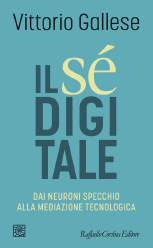
IL SÉ DIGITALE
Dai neuroni specchio alla mediazione tecnologica
Vittorio Gallese
Milano: Raffaello Cortina Editore; 2026
272 p.
ISBN 978-88-3285-844-0
€ 16.00
[The digital self: from mirror neurons to technological mediation]
For some time now, we have been asking ourselves what kinds of anthropological transformations are being brought about by the new technological dimension in which we are becoming increasingly interconnected. At times, the tone of this reflection becomes openly alarming. Some scholars point to possible modifications at the neurobiological level and – perhaps in the not-too-distant future – even on a genetic, or rather epigenetic, basis. Another crucial issue concerns how our subjectivity and our relationship with the world and with the Other (another individual of our species, whether familiar or unfamiliar) are being transformed in light of new technological devices.
This is the field of inquiry of Vittorio Gallese’s latest book, which begins with a simple question: “What happens to empathy and reciprocity when the bodily presence of the other is digitally mediated or replaced by an avatar?” (p. 60). The premise from which this well-known neuroscientist – and neurophilosopher, a rather original attribute – develops his argument is the inadequacy of a form of reductionism that has become very influential, namely the view that considers the brain an autonomous organ detached from the body.
The scientifically significant discovery and characterization of the now paradigmatic mirror neurons – to which Gallese himself contributed more than twenty-five years ago – has shown that these neural mechanisms enable us not only to emulate the movements and feelings of the Other, but also to understand them by internalizing and physically experiencing them. This major step in neuroscience has led to the key concepts of aesthetic intercorporeality and embodied simulation. The latter does not simply activate interactivity; rather, it leads to the “internalization, at a subpersonal level, of neural circuits” (p. 54), producing a pre-reflective, automatic, and non-intentional form of understanding.
In his fluid and pleasantly readable book, Gallese essentially reflects on the new ontophenomenology of the mind, a topic of great relevance both for scientists belonging to the ever-expanding biomedical and neuroscientific community and for clinicians dealing with mental suffering. For this reason, the book is likely to attract psychiatrists and clinical psychologists, particularly those concerned with the emerging, post-COVID increase in psychological difficulties among children and adolescents.
Gallese’s book first and foremost reaffirms the centrality of the physical dimension in relation to the digital one. It does so by offering a concise reflection on the bodily self – conceived not as a closed entity but as a relational one – and also on the very notion of art, which is no longer seen as a secondary domain of knowledge but rather as a central locus of experience and understanding. The act of representation thus becomes the manifestation of an extended mind that contributes to creating the world and the surrounding reality. New technologies – including those applied to art – act even more powerfully in this regard.
In the second part, the scholar turns instead to examining the digital self, which “is not a distant avatar, but an embodied projection that returns to the body, constrains it, and shapes it” (p. 101) and, much later – using an even more fitting term – reformats it.
In this new scenario, the distinction between subject and object becomes increasingly blurred, since, as Gallese reiterates, “intersubjectivity is no longer understood as a representational and inferential enterprise, but as an embodied, dynamic, and situated process, in which the Other is experienced even before being conceptualized” (p. 58). All this applies to immersive practices such as those offered by virtual reality, the metaverse, and, more broadly, by media environments. These had already been theorized more than sixty years ago by Marshall McLuhan, the first scholar to realize that mass media function as bodily extensions, anticipating the touchscreen by several decades. As the author emphasizes, it constitutes “a radical perceptual shift that reformulates the sensory conditions of our being in the world” (p. 127).
Technology is no longer merely a means, within the ontophenomenological perspective formulated by Gallese (following Simondon), but rather a genuine ontological operator, capable of modifying the body–world relationship. This inevitably recalls Benjamin and Debord, particularly when discussing the widespread ontological aestheticization that permeates every sphere of contemporary society, leading to the observation that “digital capitalism is an aesthetic machine”. Yet once technologies have exhausted their generative function, they tend to slide into spectacularization and into forms of potentially very risky surveillance. Indeed, Gallese overturns Debord’s famous assumption by arguing that it is no longer capital/spectacle – having reached such a degree of accumulation – that becomes image; rather, it is the accumulation of images that becomes capital (p. 109).
One of the chapters of the book focuses on screenology (a distinct area within media studies). The screen is conceived as an “environment” – here once again recalling McLuhan. “Is it possible to inhabit the image without being subjected to it?” Gallese asks. “Who has the right to appear?” These are ethical and political questions within the current visual regime, in which everything must be shown and displayed, yet where an excess of image production may paradoxically lead to its disappearance (as suggested by Baudrillard and Virilio).
When examining the digitalization of the self, several issues arise, including mediated and post-relational empathy, enacted through the relationships we establish not only with the Other via digital interfaces but also directly with non-human entities (AI, chatbots, robots). Here we reach perhaps the most delicate point of Gallese’s essay. While reaffirming the primacy of the human mind, the only one that is truly embodied, he reverses the terms of the debate by sidestepping the classic question: Can machines think? For the author, the real issue is not whether AI can be conscious – since it cannot become embodied in a biological substrate – but rather: “what happens to us when we begin to think and act as if it were?” (p. 192).
The risk, therefore, is not so much that AI will replace the human population that uses it, but that it will shape it, or worse, orient it, suggesting what we should think and desire. On platforms such as Character.AI or Replika, for instance, seemingly concrete affective dynamics can develop between humans and machines. According to Gallese, another danger accompanies this process: a form of disturbing reflexivity, whereby human beings themselves begin to reason like machines, conceiving of themselves as simulacra, as disembodied interfaces.
The Digital Self, in conclusion, systematizes a series of theories that are by now widely established across aesthetics, neuroscience, and media theory, helping us to gain a deeper understanding of the new relational phenomenology and the renewed status of the mind in the age of the algorithm. It does so through a clear and fluid style, culminating in a final, constructive note: the proposal of a radical and political aesthetics, “not as decoration but as resistance” (p. 211), which might enable us to inhabit new technologies critically. The author’s dynamic way of weaving together the various aspects of such a delicate contemporary issue is one of the book’s most significant strengths, especially for younger readers or students.
Gallese extends this argument to the field of art, which, he argues, must have the courage to oppose the “perceptual domestication imposed by algorithms”. This, moreover, already occurs in the works of artist-activists who employ AI, datism, and other new media while subjecting them to what might be described as a continuous détournement (once again a Debordian notion), aimed at demystifying their use in the service of power, whether governmental or technocratic. Gallese speaks of “interruption” or of a counter-aesthetics, but the underlying idea remains the same.
And yet, this seems to us the somewhat more problematic part of his overall argument. Although he cites as examples mainly installation works – perhaps not coincidentally by artists such as Molly Soda Goliath, Zach Blas Lewis, Hito Steyerl, Mette Ingvartsen, Grayson Perry, and Anicka Yi – such an aesthetics remains somewhat too general. One thing is certain: within this new epistemic horizon, the concept of the operativity of images replaces the now anachronistic notion of mere representation.
However, when the scholar attempts to reformulate his initial question “what does it mean to be human in the age of technological mediation?” into the more uncertain “what can we still become?” (p. 244), the resulting outlook does not convey a particularly convincing optimism. The danger of an ethically unsustainable attempt to artificially amplify human capacities for economic gain – something often discussed within the biomedical community – may well be lurking in the background.
For biomedical readers, such a volume does represent a possibly useful and challenging cultural experience. Author Gallese in in fact among the leaders of the group gloriously led by Giacomo Rizzolatti, MD, globally recognized for his innovative hypothesis about both the physiological and the patho-physiological role of “mirror neurons”, neural cells they characterized in monkeys and humans. From such an innovative finding, long-range speculations are fruitfully explored and expanded, particularly in a progressively digitalized world.
One solution, perhaps, would lie in making autonomous choices, without allowing the algorithm to decide for us. Yet is this option still truly possible? Or are we already moving toward a condition of collective standardization, an existential and experiential horizon in which it is not so much machines that develop feelings, but human beings who gradually lose their capacity for empathy?
Stella Falsini1, Enrico Alleva1 and Bruno Di Marino2
1Istituto Superiore di Sanità, Rome, Italy
2Accademia Nazionale di Belle Arti, Rome, Italy