
BOOK REVIEWS, NOTES AND COMMENTS
LA STRUTTURA NARRATIVA DELL’ESPERIENZA UMANA
Un’ipotesi esplicativa della psicosi
Vittorio Guidano
Vol. 2 - LA PROCESSUALITÀ DEL SELF E LE DIMENSIONI DEL SIGNIFICATO
Giovanni Cutolo and Adele De Pascale (Eds)
FrancoAngeli; 2026
620 p.
ISBN 9788835174240
[The processuality of the Self and the dimensions of meaning]
In the field of psychiatry, psychotherapy, and the cognitive and neurosciences, the question of how the human mind constructs meaning remains one of the most compelling and elusive challenges. The processuality of the Self and the dimensions of meaning, the second volume of the trilogy The Narrative structure of human experience: An explanatory hypothesis of psychosis, edited by Giovanni Cutolo and Adele De Pascale, represents a major contribution to this ongoing inquiry. The work revisits and extends the theoretical legacy of Vittorio F. Guidano, founder of systemic-processual cognitivism, offering a renewed and scientifically grounded vision of the Self as a dynamic, evolving system.
This publication marks a significant intellectual and clinical event for contemporary cognitive psychotherapy, both within Italy and internationally. Rather than merely preserving Guidano’s heritage, Giovanni Cutolo and Adele De Pascale re-elaborate his post-rationalist model in light of current developments in cognitive science, neuroscience, and evolutionary theory. Their effort results in an impressive synthesis, at once rigorous, interpretative, and profoundly humanistic, that restores vitality and contemporary relevance to Guidano’s thought.
Vittorio F. Guidano’s theoretical and clinical work dominated the cognitive psychotherapy landscape from the 1970s through the 1990s. His texts – from Cognitive processes and emotional disorders (1983, with Giovanni Liotti) to Complexity of the Self (1987) and The Self in process (1991) – shaped the contours of post-rationalist cognitivism. Guidano’s model advanced a developmental and process-oriented understanding of the Self, grounded in the interplay between emotional regulation, identity formation, and narrative meaning.
Giovanni Cutolo and Adele De Pascale, both long-time collaborators and students of Guidano, resume and expand this unfinished theoretical trajectory. As the editors emphasize, Guidano’s premature death in 1999 interrupted a process of conceptual refinement that he had begun to articulate in lectures and manuscripts. The two authors have collected, systematized, and enriched this material with contemporary scientific findings, constructing a model that integrates biology, psychology, and the philosophy of mind into a unified interpretive framework.
This approach exemplifies what can be described as an epistemology of complexity: a vision of human experience as an emergent, self-organizing system whose coherence derives from constant dialogue between its biological, emotional, and relational dimensions. Such an epistemological stance moves beyond reductionist or linear explanations of mental functioning, situating the Self as both a product and an active constructor of its own experiential world.
The second volume of the trilogy focuses on the processual and narrative dimensions of the Self – its development through language, attachment, and interpersonal relationships. Drawing from the biological theories of Maturana and Varela, the authors portray the Self as a system that maintains coherence and continuity through recursive integration of environmental perturbations. The Self emerges, therefore, not as a fixed entity but as a living process of adaptation and self-regulation.
This view finds powerful articulation in the evolutionary account the authors reconstruct from Guidano’s insights. From the earliest forms of consensual coordination among primates to the symbolic complexity introduced by language, the Self develops as both a biological and cultural achievement. The text recalls how, through the emergence of narrative and reflective capacities, human beings acquire the ability to organize experience sequentially – to order emotions, memories, and meanings within a coherent personal story.
The volume pays particular attention to the phylogenetic and ontogenetic parallels of this process. Attachment theory, especially as developed by Bowlby, becomes a crucial interpretive key: affective bonds serve as the matrix from which self-organization and identity coherence emerge. The construction of personal meaning is thus inseparable from the quality of early relational experiences, which mediate the individual’s capacity for emotional regulation and self-reflection.
Language occupies a central place in this theoretical architecture. It is not merely a communicative tool but a transformative evolutionary innovation that reshapes both external relations and internal experience. Through language, the human mind gains the capacity to step back from the immediacy of perception, constructing an inner space in which events, emotions, and images are ordered narratively. In this sense, the Self becomes both the narrator and the product of its own story.
Giovanni Cutolo and Adele De Pascale skillfully demonstrate how this process implies a tension between the internal and external dimensions of human experience – between individual subjectivity and the intersubjective contexts of family and society. The Self must remain simultaneously open to shared meaning and faithful to its personal coherence. Psychopathology, in this perspective, arises when this dynamic integration fails – when the reciprocal coordination between inner and outer experience breaks down.
By foregrounding this processual view of identity, the authors contribute an explanatory (rather than merely descriptive) model of psychopathology. They highlight that mental suffering cannot be reduced to isolated trauma or biological dysfunction; rather, it reflects disruptions in the self-organizing process that integrates cognition, affect, and relational experience. This integrative understanding opens new possibilities for psychotherapy, where the aim becomes not simply symptom reduction but the reconstitution of personal meaning.
The processuality of the Self and the dimensions of meaning exemplifies an ambitious attempt to synthesize insights from multiple disciplines – from neuroscience to paleoanthropology, from philosophy of language to systems theory. The breadth of its references is remarkable, yet never dispersive: each citation serves to illuminate the core theme of how the Self maintains coherence amid complexity.
The book’s structure reflects this multilevel organization. Early chapters reconstruct the evolutionary emergence of mentalization and narrative thought; later sections examine the developmental trajectory of the individual Self through attachment, emotion regulation, and identity formation. Particularly compelling is the final chapter on Love and knowledge, which situates affectivity as the central organizing principle of personal meaning. Love, in this model, is not a sentimental or merely interpersonal phenomenon but a fundamental epistemic category – the affective condition that makes knowledge of self and others possible.
This integration of affectivity and cognition embodies the originality of the systemic–processual approach. The model recognizes the interdependence of emotional, cognitive, and relational domains, conceiving psychotherapy as a dialogical process aimed at restoring coherence within and between them.
From a critical standpoint, one of the most striking qualities of this volume is its refusal to oversimplify. Where much of contemporary neuroscience risks fragmenting human experience into neural correlates, and where some cognitive models tend toward mechanistic reduction, Cutolo and De Pascale reassert the unity of the person. Their writing resists the temptation of premature synthesis, instead cultivating a reflective tension between scientific rigor and phenomenological depth.
Equally noteworthy is the editors’ methodological transparency. They do not conceal the fact that their reconstruction of Guidano’s thought involves interpretative choices; rather, they make these choices explicit, framing them as part of an ongoing scientific dialogue. The result is a text that is both faithful to its origins and open to innovation – a rare balance in theoretical psychotherapy.
At the same time, the volume’s intellectual density may pose a challenge for readers unfamiliar with the broader tradition of Italian cognitivism. Yet this very complexity constitutes one of the book’s strengths: it demands active engagement, inviting the reader to inhabit the same processual perspective that it describes. For clinicians, such engagement becomes an exercise in epistemological self-reflection – a reminder that therapeutic practice is itself a narrative and evolutionary endeavor.
Beyond its theoretical richness, The processuality of the Self and the dimensions of meaning offers substantial practical relevance. For mental health professionals, it provides a nuanced framework for understanding the intricate interplay of identity, emotion, and relational dynamics underlying severe psychopathology. The systemic–processual perspective does not reduce disorders such as psychosis or personality disturbances to static categories; instead, it situates them within the broader continuum of human experience, emphasizing continuity between so-called normality and pathology.
For students and young researchers, the volume serves as both a guide and an intellectual provocation. It encourages critical engagement with the epistemological foundations of psychotherapy and models a way of thinking that bridges empirical research and philosophical reflection. In an academic climate often dominated by technical specialization, the book stands as a call to restore the unity of scientific and humanistic inquiry.
In conclusion, The processuality of the Self and the dimensions of meaning represents a work of extraordinary theoretical and clinical significance. It revitalizes Guidano’s systemic-processual model, integrating it with contemporary scientific knowledge while preserving its humanistic spirit. By weaving together evolutionary, neuroscientific, and narrative perspectives, Giovanni Cutolo and Adele De Pascale offer a coherent and deeply original vision of the Self as an ongoing process of meaning-making.
The text’s relevance extends well beyond the confines of Italian post-rationalist cognitivism. It contributes to a broader international dialogue on the nature of consciousness, identity, and emotional life – issues that remain central to the future of psychotherapy. For scholars and clinicians alike, this book stands as both a landmark and an invitation: a landmark in the continuity of a tradition that unites theory and practice, and an invitation to explore new directions in the science of mind and the art of healing. The authors thus deliver to the scientific community a work that not only honors the legacy of Vittorio Guidano but renews its vitality, projecting it toward new horizons of research, clinical practice, and epistemological reflection.
Paola Cimbolli
Clinical Psychologist and Psychotherapist
Rome, Italy
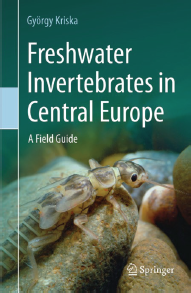
FRESHWATER INVERTEBRATES IN CENTRAL EUROPE
A field guide
György Kriska
Switzerland: Springer Nature; 2023.
2nd edition. 527 p.
ISBN 978-3-030-95322-5
ISBN 978-3-030-95323-2 (eBook)
The possible hazardous level of several recognized toxicants needs to be continuously monitored and appropriate, rapid intervention is due when they show abnormal elevation. The safety of drinking water remains in fact an absolute priority for both humans and nonhuman animal subjects. However, other biological indicators may well be exploited in order both to complement the more employed chemico-physical parameters and to implement a highly refined and somehow innovative way of assessing the ecological status of even complex freshwater ecosystems. The sudden or progressive populational decline of a given living organisms as well as the appearance of a new species, in this environmental context, or the variation in the monitored ratio in the local interspecific network, may profitably provide reliable (and not rarely preventive) way of counteracting increased levels of pollution or other potentially dangerous substances entering an ecosystem connected to the drinking water circuit.
As now widely known, the “One Health” perspective, and accordingly a view of global, planetary well-being concerning human, animal, and environmental health as a strictly interconnected living ensemble, is promoting new avenues to contemporary biomedicine. It seems therefore that both the clinical and basic-research scientific communities are presently in need of a more comprehensive education, including essential aspects of natural and ecological issues. A book providing reliable information on a vast variety of animal species inhabiting freshwater ecosystems may well represent a good reading opportunity for the biomedical audience, particularly for professional ecotoxicologists.
Macroinvertebrates are small aquatic organisms that are large generally >0.5 mm. They include insect larvae, molluscs, crustaceans, and annelids. These organisms inhabit freshwater ecosystems such as spring, rivers, streams, lakes, and wetlands, where they play a fundamental role in ecosystem functioning, including nutrient cycling and organic matter decomposition [1].
Because of their sensitivity to environmental changes, macroinvertebrates are widely used as biological indicators of freshwater ecosystem health [2]. The manual Freshwater invertebrates in Central Europe – A field guide by György Kriska is highly valuable for both ecosystem and human health because it provides the technical foundation for accurate biomonitoring, which is essential for managing water resources and identifying environmental risks for ecosystems and human health. Macroinvertebrates are primarily benthic organisms that live on or within the substrate of aquatic ecosystems. Their distribution depends on environmental variables such as dissolved oxygen, water temperature, flow velocity, and substrate composition; anthropogenic pressures such as modification of hydromorphology or chemical and microbiological pollution also affect it.
They are commonly classified into functional feeding groups, including shredders, grazers, collectors, and predators, which reflect their ecological role in aquatic food webs [2]. Due to their relatively long-life cycles and limited mobility, macroinvertebrates provide an integrated response to environmental conditions over time, making them reliable indicators of habitat quality.
Macroinvertebrates are widely used as bioindicators of water quality and ecosystem health because of their varying sensitivity to pollution and habitat disturbance. Some taxa are highly sensitive to organic pollution and low oxygen conditions, while others are more tolerant and can survive in degraded environments. The monitoring programs typically evaluate taxonomic composition, species richness and diversity, abundance of sensitive taxa (especially Ephemeroptera, Plecoptera, and Trichoptera-EPT taxa).
This manual specifically may improve results for accuracy in the field. Unlike traditional keys that use preserved specimens, this manual uses photographs in natural habitats to preserve diagnostic features like colour, posture, and fine anatomical details that are often lost during fixation. The photographs are in ecological context. The images provide information on substrate type and flow conditions, which are crucial for identifying habitat-specific species.
These data are traditionally used to calculate biological indices such as BMWP, ASPT, and Ecological Quality Ratio (EQR), which provide standardized measures of ecosystem health [3].
In Europe, the Water Framework Directive (WFD) (Directive 2000/60/EC) establishes a legal framework for the protection of European water bodies. It requires Member States to assess the ecological status of surface waters using biological quality elements, including macroinvertebrates. A central concept of the WFD is the Ecological Quality Ratio (EQR), which compares observed biological conditions with reference. The Common Implementation Strategy (CIS) of the WFD provides technical guidance for the implementation of the WFD, ensuring harmonization of methods across Member States. It includes standardized approaches for sampling design, biological indices, and intercalibration procedures. Standardized methods for macroinvertebrate monitoring are defined in technical standards. These standards ensure consistency and comparability of ecological assessments across Europe.
At the international level, the United States Clean Water Act (CWA) provides the legal framework for water pollution control. Biological assessments, including macroinvertebrate monitoring, are widely used by the US Environmental Protection Agency (EPA) to evaluate water quality and ecosystem integrity (US EPA, 2013) [4].
Macroinvertebrates are essential biological indicators for assessing freshwater ecosystem health. Their ecological sensitivity, combined with standardized monitoring methods and strong regulatory frameworks such as the EU Water Framework Directive and the US Clean Water Act, makes them fundamental tools in modern water resource management and for ecosystem health.
A photographic identification manual of freshwater macroinvertebrates, especially including images taken in natural environments, is highly valuable for both scientific monitoring and education. Macroinvertebrates often show subtle morphological differences between species, and many taxa are difficult to distinguish using preserved specimens alone, as colour, posture, and fine anatomical details may be altered during fixation [2]. Field photographs help therefore preserve these diagnostic features in their natural state, improving the accuracy of identification while reducing taxonomic errors.
In addition, images taken directly in aquatic habitats provide essential ecological context, such as substrate type, flow conditions, and microhabitat associations. This information is important because macroinvertebrate distribution is strongly influenced by environmental conditions, and many species are habitat-specific [2]. A photographic guide also supports rapid field identification, increasing efficiency during biomonitoring surveys.
Moreover, such manuals are extremely useful for species identification even in the most complicated cases and for training students and technicians, helping them to develop recognition skills more effectively than using dichotomous keys alone. Overall, photographic manuals enhance data quality, standardisation, and reliability in freshwater biomonitoring programmes, including those required under the EU Water Framework Directive
Photographic and taxonomic identification manuals of freshwater macroinvertebrates do represent essential tools for biomonitoring and ecological assessment. Traditional keys, such as those developed in many countries provide detailed morphological descriptions and dichotomous identification pathways, structuring the basis of freshwater biomonitoring. At the European level, standardized operational manuals developed under the Water Framework Directive support harmonized sampling and identification procedures across Member States. In addition, photographic atlases enhance field identification by showing organisms under natural conditions, improving accuracy and reducing taxonomic errors, especially for non-specialists [1]. Together, these resources ensure reliable, repeatable, and standardized assessment of freshwater ecological status.
This up-to-date guidebook on freshwater invertebrates of the central European region is a new guideline for field identification. It is a richly illustrated work, providing a good source of systematic information on freshwater macroinvertebrates. There are 525 illustrations in colour included and additional vector graphic figures that allow readers to identify specific species, genres and taxonomic families. The colour photos of taxa in natural habitat provide a useful support for the taxonomic identification. The book is supplemented by video sequences.
Freshwater invertebrates in Central Europe – A field guide is a must-have for all those interested in the freshwater animals of central Europe such as biologists, ecologists, specialized technicians in biomonitoring of benthos in freshwater as well as students attending courses and classes on freshwater and applied ecology.
Laura Mancini and Enrico Alleva
Istituto Superiore di Sanità, Rome, Italy
REFERENCES
- 1. Rosenberg DM, Resh VH. Freshwater biomonitoring and benthic macroinvertebrates. Chapman & Hall; 1993.
- 2. Hauer FR, Lamberti GA. Methods in stream ecology. Academic Press; 2017.
- 3. Mancini L. Organization of biological monitoring in the European Union. In: G. Ziglio, M. Siligardi, G. Flaim (Eds). Biological monitoring of rivers: applications and perspectives. John Wiley & Sons; 2006. p. 171-201.
- 4. US Environmental Protection Agency. National rivers and streams assessment: Field operations manual. Washington, DC: USEPA Office of Water; 2013. (Report n. EPA-841-B-12-009a).